Why Meal Planning Helps Meet Protein Goals
When you plan meals ahead, you give yourself a clear path to include protein-rich foods at every eating occasion. Without a plan, busy days often lead to choices that are low in protein and leave you feeling hungry soon after. A simple routine—deciding on breakfast, lunch, dinner, and snacks—can make it easier to consistently add protein foods you enjoy.
Meal planning also helps you use the protein foods you already have in the fridge or pantry. By thinking about what to eat before you’re hungry, you reduce the chance of relying on convenience foods that may not offer enough protein.
- Planning encourages a regular eating rhythm with protein at most meals.
- A short weekly menu can be built around your favorite protein foods, from eggs and Greek yogurt to beans and poultry.
- Meal prep—like cooking extra chicken or hard-boiling eggs—saves time during the week.
The Plate Method: Adding Protein Foods
A balanced meal often includes a protein food, vegetables, carbohydrates, and a source of healthy fat. The plate method is a visual guide: fill about half your plate with vegetables, a quarter with protein foods, and a quarter with carbohydrates like whole grains or starchy vegetables. Add a small amount of fat, such as olive oil, avocado, or nuts.
This approach helps you create satisfying meals without weighing or measuring every bite. Protein foods can include eggs, Greek yogurt, cottage cheese, poultry, fish, beans, lentils, tofu, or lean meats. Choose what fits your taste and budget.
- Protein foods: chicken breast, turkey, fish, eggs, Greek yogurt, cottage cheese, beans, lentils, tofu.
- Vegetables: leafy greens, broccoli, peppers, carrots, or any non-starchy vegetable.
- Carbohydrates: brown rice, quinoa, whole-wheat bread, sweet potatoes, or oats.
- Fats: olive oil, avocado, nuts, or seeds.
High-Protein Breakfast Ideas
Starting the day with protein can help you feel full and energized. Eggs are a classic choice—two large eggs provide about 12 grams of protein, according to the Administration for Community Living. Greek yogurt is another quick option, offering roughly 24.5 grams of protein per cup, though this can vary by brand and type. For a portable meal, a smoothie made with protein powder can deliver a substantial amount of protein, depending on the powder and serving size.
If you prefer savory breakfasts, try a veggie omelet with a slice of whole-grain toast, or pair cottage cheese with fruit. Cottage cheese offers about 13 grams of protein per half-cup. For make-ahead convenience, prep hard-boiled eggs or individual containers of yogurt and berries the night before.
- Scrambled eggs with spinach and feta: 2 large eggs offer about 12 grams of protein.
- Greek yogurt bowl: 1 cup of plain Greek yogurt with berries and a sprinkle of nuts.
- Protein smoothie: blend protein powder with milk or a milk alternative, fruit, and nut butter.
- Cottage cheese and fruit: 1/2 cup of cottage cheese provides about 13 grams of protein.
Sources: Administration for Community Living (ACL), Healthline
High-Protein Lunch and Dinner Ideas
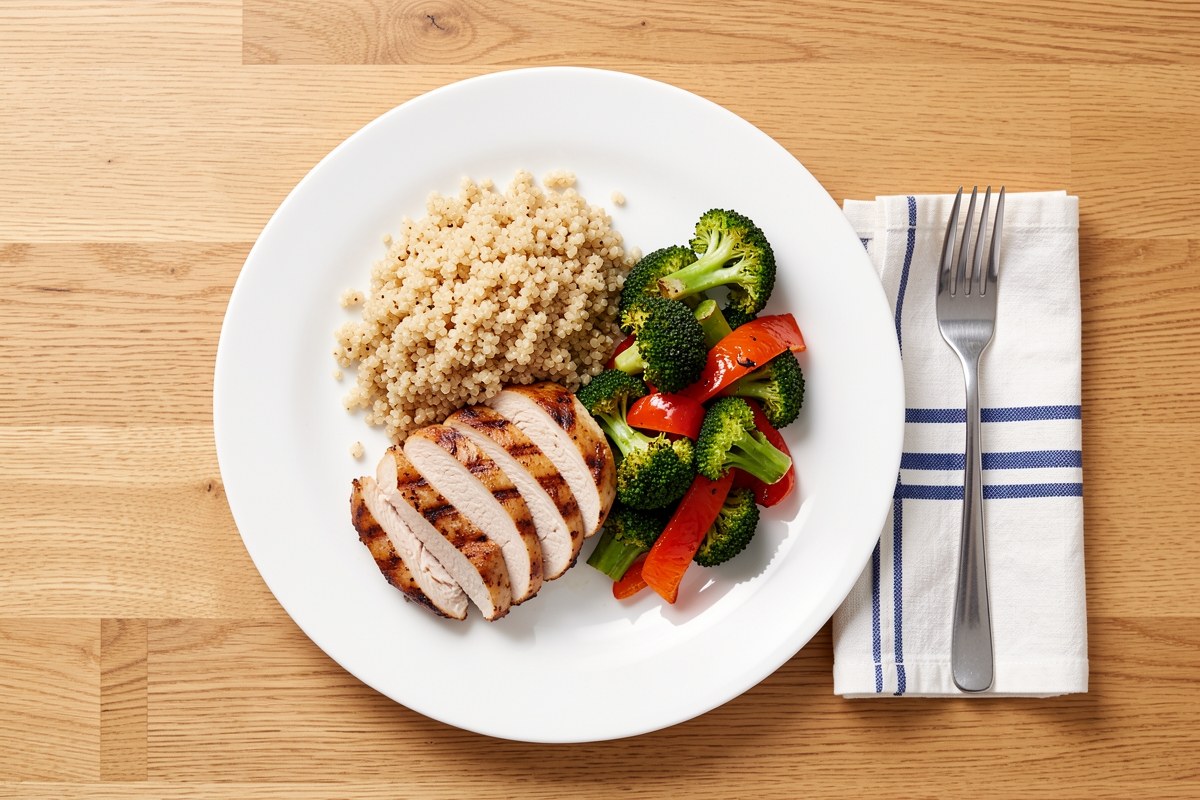
Lunch and dinner are natural places to include a generous portion of protein. A simple formula is to choose a protein food, add a couple of vegetables, and pair it with a whole grain or another carbohydrate. For example, grilled chicken breast with roasted broccoli and quinoa, or a salmon fillet with a side salad and sweet potato.
Fish like salmon is a great source: about 3 ounces of cooked salmon provides roughly 21 grams of protein. Chicken and beef both offer about 23 grams per 3 ounces. Plant-based eaters can turn to edamame (about 17 grams per cup) or black beans (about 15 grams per cup), which also deliver fiber.
If you prefer not to cook every night, use meal prep to your advantage. Roast a tray of chicken thighs and vegetables on Sunday, or make a big batch of lentil soup for quick lunches. For dinner, you can also use canned tuna or rotisserie chicken to assemble salads, wraps, or grain bowls in minutes.
- Grilled chicken breast with quinoa and roasted vegetables.
- Baked salmon with sweet potato and green beans.
- Turkey and cheese roll-ups made with deli turkey and part-skim mozzarella sticks.
- Stir-fried shrimp with broccoli and brown rice.
Sources: Administration for Community Living (ACL), MealThinker
High-Protein Snacks on the Go
Snacks can help you reach your protein targets, especially between meals. Some sources suggest aiming for 10–20 grams of protein per snack, but individual needs vary. Portable options include hard-boiled eggs (about 6 grams each), Greek yogurt (about 24.5 grams per cup), and cottage cheese (about 13 grams per half-cup).
For plant-based snacks, try roasted chickpeas, edamame (about 17 grams per cup), or pumpkin seeds (about 8.8 grams per quarter-cup). Peanut butter on apple slices gives you about 7 grams of protein from two tablespoons. If you enjoy a protein shake, a smoothie made with protein powder can deliver a significant amount, making it a suitable snack after a workout or as a meal replacement when combined with fruit and vegetables.
- Hard-boiled eggs: make a batch on Sunday for grab-and-go snacks.
- Greek yogurt cups: choose plain varieties and add your own fruit.
- Jerky: look for lower-sodium options without added sugars.
- Roasted chickpeas: toss with olive oil and spices, then bake until crisp.
- Nut butter packets: pair with banana or whole-grain crackers.
Sources: Administration for Community Living (ACL), Healthline, MealThinker
Balancing Protein with Other Nutrients
Protein is important, but meals and snacks should also include carbohydrates, fats, vitamins, and minerals. Carbohydrates provide energy, while fats help absorb certain nutrients and support hormone function. Vegetables and fruits add fiber and antioxidants, helping you feel full and supporting overall health.
A balanced plate naturally includes these other components, so you don’t need to track every nutrient. For snacks, pair protein with a source of complex carbs—like fruit, vegetables, or whole grains—to create a satisfying combination. For example, Greek yogurt with berries provides protein plus carbohydrates and fiber, while hummus with carrot sticks offers protein and healthy fats from the sesame seeds in the hummus.
When selecting protein foods, think about variety to get different amino acids and nutrients. Animal proteins like eggs, dairy, and lean meats are complete proteins, meaning they provide all essential amino acids. Most plant proteins lack one or more essential amino acids, but by eating a variety of plant proteins throughout the day, you can get all of them. Combining legumes with grains, such as rice and beans, is a classic way to create a complete amino acid profile. Including a variety of protein sources across meals is a simple way to meet your needs without much effort.
- Pair protein with carbohydrates: whole-grain toast, fruit, or starchy vegetables.
- Include fats from sources like olive oil, avocado, nuts, and seeds.
- Aim for colorful vegetables at lunch and dinner to boost fiber and micronutrients.
- Rotate your protein foods: eggs, Greek yogurt, chicken, fish, beans, lentils, and tofu keep meals interesting.
Sources: Administration for Community Living (ACL), MealThinker
Sample One-Day High-Protein Menu
The following sample menu shows how to combine the ideas above into a full day of satisfying meals. Protein amounts are approximate and based on common portion sizes; actual values can vary by brand and preparation. This example is meant as a template you can adjust to your own tastes and calorie needs.
- Breakfast: Greek yogurt bowl (1 cup plain Greek yogurt, 1/2 cup mixed berries, 1 tbsp almond butter).
- Lunch: Grilled chicken salad (4 oz grilled chicken breast, mixed greens, cherry tomatoes, cucumber, 1 tbsp olive oil vinaigrette).
- Snack: 1 hard-boiled egg and a small handful of almonds.
- Dinner: Baked salmon (5 oz) with quinoa (1 cup cooked) and asparagus.
- Evening snack: 1/2 cup cottage cheese with pineapple.
Sources: Administration for Community Living (ACL), Healthline
Frequently asked questions
How can I increase protein without eating more meat?
You can add protein from dairy, eggs, legumes, and soy products. Greek yogurt, cottage cheese, and eggs are convenient animal-based options. For plant-based sources, try beans, lentils, chickpeas, edamame, tofu, and pumpkin seeds. For example, a half-cup of cooked black beans provides about 7.5 grams of protein, and a cup of cooked edamame offers about 17 grams. You can also use protein powder in smoothies, but the amount of protein will depend on the powder and serving size.
Sources: Administration for Community Living (ACL), MealThinkerWhat are quick high-protein breakfasts for busy mornings?
Greek yogurt with fruit, a smoothie with protein powder, or a couple of hard-boiled eggs eaten on their own are all fast options. Two large eggs supply about 12 grams of protein. A cup of Greek yogurt typically offers about 24.5 grams of protein. For a make-ahead breakfast, you can prepare overnight oats with Greek yogurt or bake egg muffins on the weekend.
Sources: Administration for Community Living (ACL), HealthlineCan I meal prep high-protein lunches for the week?
Yes, meal prepping is a helpful way to stay on track. You can cook a large batch of chicken, hard-boil eggs, or prepare containers of Greek yogurt and nuts for quick grab-and-go lunches. Turkey and cheese roll-ups made with deli turkey and cheese sticks are a simple no-cook option that provides about 12 grams of protein per roll-up, based on the ingredients used. Keep portions in airtight containers in the refrigerator for up to 3–4 days.
Sources: Administration for Community Living (ACL)What are healthy high-protein snacks under 200 calories?
Several high-protein snacks fit within a 200-calorie budget. One hard-boiled egg provides about 6 grams of protein and about 78 calories. A single-serving container of Greek yogurt can provide about 24.5 grams of protein per cup, though portion sizes and calories vary by brand. Half a cup of cottage cheese provides about 13 grams of protein and is typically under 100 calories for low-fat versions. For a plant-based option, a quarter-cup of pumpkin seeds provides about 8.8 grams of protein and roughly 180 calories, though the exact amount depends on preparation.
Sources: Administration for Community Living (ACL), HealthlineSources
- High Protein Foods: 18 Foods for High Protein Meals — Healthline
- High Protein Meal Plan: How Much You Need and What to Eat (2026) — MealThinker
- Protein Tip Sheet — Administration for Community Living (ACL)