Why Fish and Seafood Are Unique Protein Sources
Fish and seafood are distinctive among protein sources because they provide high-quality protein with relatively low saturated fat and calories. The USDA's Economic Research Service notes that seafood is a nutrient-dense protein option and that the Dietary Guidelines for Americans recommend adults eat at least two servings of seafood per week, which translates to about 8 ounces for a 2,000-calorie diet. Despite this, Americans consume only about 5% of their protein foods from seafood, compared to the recommended 20%.
Seafood proteins constitute about 10–25% of seafood and have excellent amino acid scores and digestibility. Some research suggests fish protein quality may rival that of ideal proteins like lactalbumin and could exceed that of terrestrial meat. Fish and seafood are also the primary food source of beneficial omega-3 fatty acids EPA and DHA.
This guide explores protein amounts, omega-3 benefits, contaminant considerations, sustainable choices, and cooking methods to help you make the most of these nutritious options.
Sources: USDA Economic Research Service, Global Journal of Health Science (via PubMed Central)
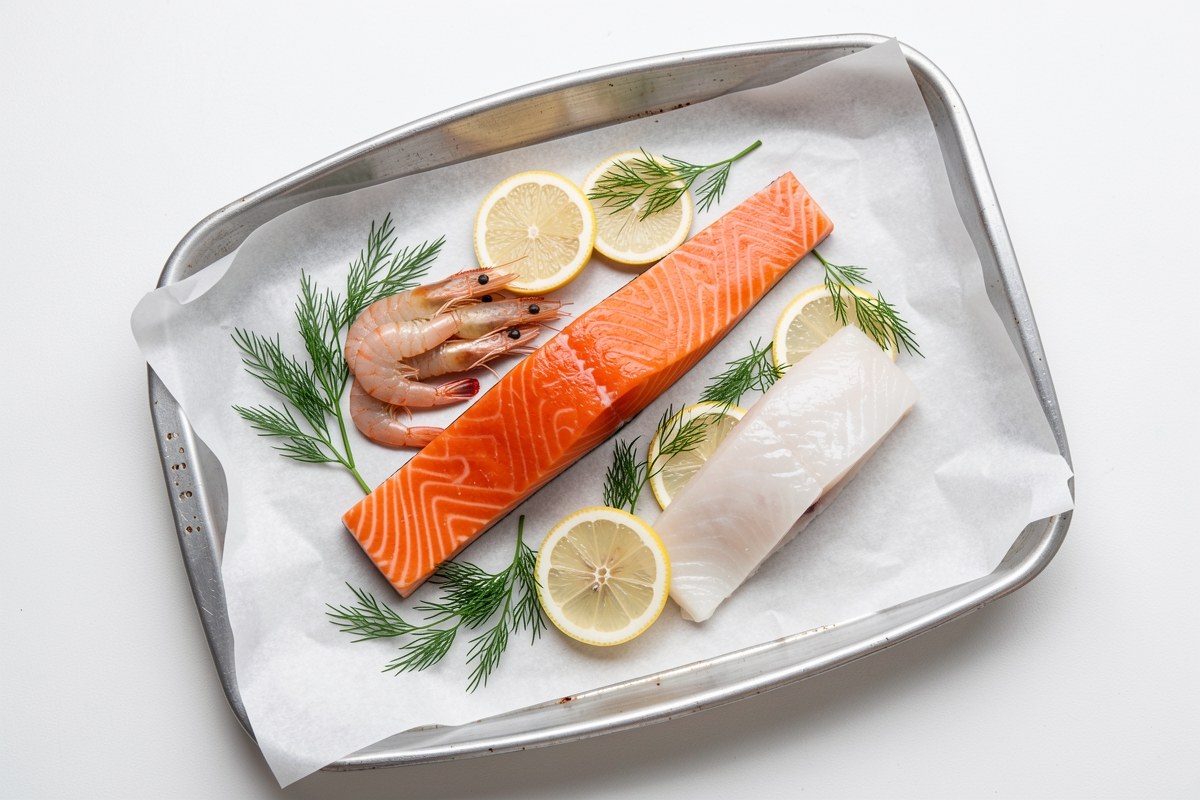
Protein Content of Popular Fish and Seafood
Most fish and seafood provide 20–30 grams of protein per 3-ounce cooked serving. A 3-ounce serving generally provides up to 40% of the daily protein requirement for adults. Protein content varies by species and cooking method, but the following table offers typical values for common options.
Lean fish like cod and halibut are lower in calories, while fattier fish like salmon and mackerel provide more omega-3s. Shellfish such as shrimp and crab are also lean protein choices.
| Food | Protein (g) | Calories |
|---|---|---|
| Tuna (yellowfin) | 30 | 139 |
| Tilapia | 26.3 | 128 |
| Mackerel | 23.8 | 232 |
| Sardines | 23.4 | 177 |
| Swordfish | 23 | 140 |
| Cod | 22.8 | 105 |
| Salmon | 22.1 | 206 |
| Shrimp | 20.9 | 99 |
| Halibut | 20.6 | 122 |
| Crab | 19 | 85 |
Omega-3 Fatty Acids: Heart and Brain Benefits
Fish and seafood are the primary food sources of EPA and DHA, omega-3 fatty acids linked to heart and brain health. Fatty fish such as salmon, mackerel, herring, and sardines have moderate to high omega-3 content.
Research has explored the role of these fatty acids in preventing cardiovascular and thrombotic diseases. For example, a 2012 review suggested that dietary n-3 polyunsaturated fatty acids, including EPA and DHA, may help prevent arteriosclerotic and thrombotic disease. More recent evidence continues to highlight their potential benefits for heart and brain health, though specific recommendations may evolve.
Sources: Global Journal of Health Science (via PubMed Central), USDA Economic Research Service
Mercury
- The FDA provides advice on fish consumption for pregnant and breastfeeding women, recommending 8–12 ounces of low-mercury seafood per week.
- High-mercury fish include shark, swordfish, king mackerel, and tilefish; these should be avoided or limited.
Sources: University of Florida IFAS Extension, Washington State Department of Health, Science of The Total Environment (via PubMed Central)
Sustainable Seafood Choices
Sustainability is a complex issue involving overfishing and environmental impact. Reliable guidance is available from organizations like the Monterey Bay Aquarium Seafood Watch, which publishes science-based recommendations.
Eco-labels such as the Marine Stewardship Council (MSC) for wild-caught and the Aquaculture Stewardship Council (ASC) for farmed seafood indicate that products meet recognized standards. To make more sustainable choices, consider diversifying your seafood intake and exploring lesser-known, abundant species.
- Check consumer guides for current ratings, as recommendations can change over time.
- Ask about the origin and fishing or farming methods when buying seafood.
Cooking Methods to Preserve Benefits
Cooking methods can influence the nutritional profile of fish and seafood. Broiling, grilling, or baking on a rack allows fat to drip away, which can reduce fat-soluble contaminants. These methods also add flavor without excessive oil.
The Washington State Department of Health recommends trimming skin and fat before cooking to reduce contaminants. While deep-frying adds calories and fat, methods like baking, steaming, and poaching are healthy options that preserve moisture and nutrients.
- For fatty fish, trim visible fat to reduce exposure to any fat-soluble contaminants.
- Aim for an internal temperature of 145°F when cooking fish to ensure safety.
Incorporating Fish and Seafood into Your Diet
Aim for at least 8 ounces of seafood per week, equivalent to about two servings, as recommended by the Dietary Guidelines. Including a variety of fish and shellfish can help you meet protein and omega-3 needs.
Start with mild-tasting fish like cod or tilapia and bake with lemon and herbs. Add canned tuna or salmon to salads. Grill shrimp or scallops for pasta or rice bowls. Use canned sardines or mackerel as snacks. When buying canned options, choose low-sodium varieties or rinse them to reduce sodium.
For additional ideas and comparisons, see our guide to animal protein sources and high-protein foods list.
Sources: USDA Economic Research Service, University of Florida IFAS Extension
Frequently asked questions
Which fish has the most protein?
Among the commonly consumed fish, yellowfin tuna provides about 30 grams of protein per 3-ounce serving, which is higher than many other options. Tilapia (26.3g), mackerel (23.8g), and sardines (23.4g) are also good sources. Most fish offer 20–30 grams per serving, but actual amounts vary.
Sources: Nordic CatchHow much fish should I eat per week?
The Dietary Guidelines for Americans recommend about 8 ounces of seafood per week for a 2,000-calorie diet, which is typically two servings. The FDA advises pregnant and breastfeeding women to eat 8–12 ounces of low-mercury seafood per week. Eating a variety of fish can help you meet these recommendations.
Sources: USDA Economic Research Service, University of Florida IFAS ExtensionWhat are good seafood choices for pregnant women?
Pregnant women are advised to eat 8–12 ounces of low-mercury seafood per week. Good choices include shrimp, salmon, pollock, catfish, and canned light tuna. These are generally low in mercury and provide beneficial nutrients. Avoid high-mercury fish such as shark, swordfish, king mackerel, and tilefish.
Sources: University of Florida IFAS Extension, Washington State Department of HealthCan I get enough omega-3s from fish alone?
Yes, eating fish—especially fatty varieties like salmon, mackerel, herring, and sardines—two to three times a week can provide enough omega-3s for most people. The exact amount depends on the species and serving size. Fish also provides protein and other nutrients, making it a good whole-food source of omega-3s.
Sources: Global Journal of Health Science (via PubMed Central), University of Florida IFAS ExtensionSources
- Americans’ Seafood Consumption Below Recommendations — USDA Economic Research Service
- Seafood Consumption and Components for Health — Global Journal of Health Science (via PubMed Central)
- FSHN14-05/FS247: Shopping for Health: Seafood — University of Florida IFAS Extension
- Contaminants in Fish | Washington State Department of Health — Washington State Department of Health
- Contaminants in fish from U.S. rivers: Probability-based national assessments — Science of The Total Environment (via PubMed Central)
- Highest Protein Seafood - Boost Diet | Nordic Catch — Nordic Catch