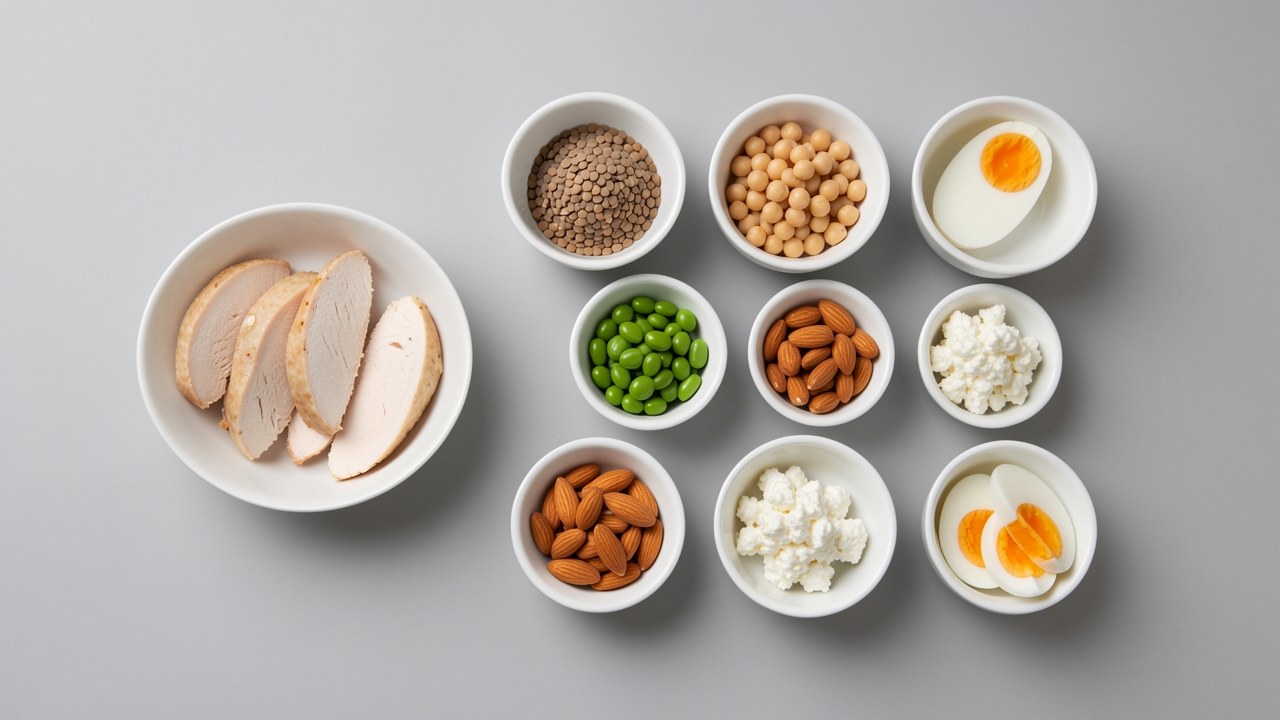
How to Use This Chart
This chart organizes high-protein foods by category, showing the typical protein content for a standard serving size. Use it as a quick reference to compare options and plan meals.
Protein values come from common nutrition sources and are approximate; actual content can vary by brand, preparation, and other factors. Always check food labels for packaged products.
- Serving sizes reflect common measurements, such as cups or ounces.
- Cooked foods are listed unless otherwise noted.
- Use the chart to identify foods that fit your dietary preferences.
Sources: Louisville Jerky Co., Healthline
Animal-Based Protein Foods
Animal-based foods like meat, poultry, fish, eggs, and dairy are known for providing high-quality protein with all essential amino acids. The table below lists common options and their approximate protein content per serving.
| Food | Serving Size | Protein (grams) |
|---|---|---|
| Chicken breast (cooked) | 3 oz (85 g) | 26 |
| Egg (large) | 1 egg (50 g) | 6 |
| Greek yogurt (non-fat) | ½ cup (113 g) | 11 |
| Cottage cheese (low-fat) | ½ cup (113 g) | 14 |
| Cheddar cheese | 1 oz (28 g) | 7 |
Sources: Teladoc Health
Plant-Based High-Protein Foods
Plant foods can also be excellent sources of protein, though some may lack one or more essential amino acids. Eating a variety of plant proteins throughout the day helps ensure you get all the amino acids your body needs. The following table highlights well-known plant-based protein options.
| Food | Serving Size | Protein (grams) |
|---|---|---|
| Seitan | 3 oz (85 g) | 20–25 |
| Lentils (cooked) | 1 cup (198 g) | 17–18 |
| Firm tofu | ½ cup (125 g) | 22 |
| Tempeh | 1 cup (166 g) | 34 |
| Edamame (shelled) | 1 cup (155 g) | 18 |
| Chickpeas (cooked) | 1 cup (164 g) | 15 |
| Quinoa (cooked) | 1 cup (185 g) | 8 |
| Hemp seeds | 3 tbsp (30 g) | 10 |
| Chia seeds | 2 tbsp (28 g) | 5 |
| Almonds | 1 oz (28 g) | 6 |
Sources: Louisville Jerky Co., The I Will Projects, BBC Good Food
Protein Content in Dairy and Eggs
Dairy products and eggs are complete proteins, providing all essential amino acids. They are also convenient options for adding protein to meals and snacks. The table below lists some common dairy and egg options with their protein content.
| Food | Serving Size | Protein (grams) |
|---|---|---|
| Greek yogurt (non-fat) | ½ cup (113 g) | 11 |
| Cottage cheese (low-fat) | ½ cup (113 g) | 14 |
| Cheddar cheese | 1 oz (28 g) | 7 |
| Egg (large) | 1 egg (50 g) | 6 |
Sources: Teladoc Health
Protein Content in Legumes and Nuts
Legumes—such as lentils, chickpeas, and edamame—are among the richest plant sources of protein. Nuts and seeds also provide protein along with healthy fats, though in smaller amounts per serving.
Soy-based foods like tofu, tempeh, and edamame are complete proteins, meaning they contain all nine essential amino acids.
- Cooked lentils: 17–18 g per cup.
- Edamame: 18 g per cup, shelled.
- Chickpeas: 15 g per cooked cup.
- Hemp seeds: 10 g per 3 tablespoons.
- Almonds: about 6 g per 1-ounce serving.
- Soy products (tofu, tempeh, edamame) are complete proteins.
Sources: Just Up It, Louisville Jerky Co., Healthline, The I Will Projects, BBC Good Food, GoodRx
Protein Content in Grains
While grains are not typically the highest source of protein, some contribute meaningful amounts. Quinoa, for instance, is a pseudo-grain that provides more protein than many common grains.
| Food | Serving Size | Protein (grams) |
|---|---|---|
| Quinoa (cooked) | 1 cup (185 g) | 8 |
Sources: Louisville Jerky Co., The I Will Projects
Tips for Incorporating High-Protein Foods into Meals
Use this list to plan balanced meals and snacks. Pairing a plant-based protein like beans with a grain such as rice creates a more complete amino acid profile, and including dairy or eggs adds variety.
For each meal, consider one or two high-protein foods from the list. For example, add Greek yogurt to breakfast, include lentils in a lunch salad, and choose chicken or tofu for dinner.
- Combine legumes with grains for complementary proteins.
- Add seeds like hemp or chia to smoothies, oatmeal, or yogurt.
- Snack on a handful of almonds or a boiled egg.
- Use tofu or tempeh in stir-fries, curries, or sandwiches.
Sources: Just Up It, Louisville Jerky Co., Healthline, The I Will Projects, GoodRx
Tips for Reading Nutrition Labels
The Nutrition Facts label on packaged foods provides the exact protein content per serving. Compare the serving size on the label to what you actually eat to calculate your protein intake accurately.
Protein values can vary between brands and product types, even for similar foods. Rely on the label for specific products.
- Check the serving size and number of servings per container.
- Protein is listed in grams on the label.
- Frozen or prepared dishes may have different protein amounts than fresh versions.
Sources: Healthline
Serving Size Notes
Serving sizes in this list are typical household measurements, such as cups or ounces. To replicate these amounts, measure cooked foods after preparation, and use a food scale for accuracy if desired.
For example, a 3-ounce serving of meat is about the size of a deck of cards. For seeds, 3 tablespoons of hemp seeds or 2 tablespoons of chia seeds can be easily added to recipes.
- Cooked foods yield different weights than raw; use the cooked serving sizes listed.
- A cup is a standard measuring cup; for solid foods, it refers to the volume of the food.
- Adjust portions to meet your individual protein needs.
Sources: Louisville Jerky Co.
Frequently asked questions
Which food has the highest protein per serving?
Among the foods on this list, tempeh and seitan provide high amounts: tempeh offers about 20–34 g per cup and seitan about 20–25 g per 3-ounce serving. However, the 'highest' depends on serving size, and animal sources like chicken breast also deliver around 26 g per 3 ounces.
Sources: Louisville Jerky Co., BBC Good Food, Teladoc HealthAre plant-based protein foods as high in protein as animal sources?
Some plant foods are comparable, but per serving most plant sources provide less protein than lean meats, poultry, fish, and eggs. For example, a 3-ounce chicken breast has about 26 g, while a cup of cooked lentils has about 17–18 g. However, soy products like tofu, tempeh, and edamame are complete proteins and can approach animal levels.
Sources: Louisville Jerky Co., Healthline, The I Will Projects, Teladoc HealthWhat are the best high-protein foods for weight loss?
High-protein foods that are relatively low in calories, such as chicken breast, Greek yogurt, lentils, and edamame, can help support weight loss by promoting fullness. Pairing protein with vegetables and using healthy cooking methods can also help manage calorie intake.
Sources: Louisville Jerky Co., Teladoc HealthCan I meet my daily protein needs with plant foods alone?
Yes, it is possible with a well-planned plant-based diet. Including a variety of plant proteins—like legumes, soy products, nuts, and whole grains—throughout the day provides all essential amino acids. Soy products are complete proteins, and combining different plant proteins also covers amino acid needs.
Sources: Healthline, GoodRxHow much protein is in a chicken breast?
A cooked chicken breast (3 oz or 85 g) contains about 26 grams of protein. The exact amount can vary with the size of the breast and cooking method.
Sources: Teladoc HealthWhich plant food has the most protein per serving?
Per typical serving, seitan and tempeh are among the highest plant-based sources: seitan provides about 20–25 g per 3 ounces, and tempeh about 20–34 g per cup, depending on the product and preparation.
Sources: Louisville Jerky Co., BBC Good FoodHow many grams of protein are in an egg?
A large egg contains about 6 grams of protein. Both the white and yolk contribute, with the white providing slightly more than the yolk.
Sources: Teladoc HealthIs the protein content on labels always accurate?
Nutrition labels must follow government regulations and are generally reliable, but slight variations can occur due to natural food differences and measurement tolerances. For packaged foods, the label is the best way to know the protein content.
Sources: HealthlineSources
- 8 High Protein Foods for Vegans & Vegetarians – Just Up It — Just Up It
- Your Complete High Protein Vegan Foods List — Louisville Jerky Co.
- The 18 Best Protein Sources for Vegans and Vegetarians — Healthline
- The Top 10 High Protein Plant-Based Foods for Vegans and Vegetarians - The I Will Projects — The I Will Projects
- 20 high-protein vegetarian foods | Good Food — BBC Good Food
- 17 High-Protein Vegan Snacks That Kick Cravings — GoodRx
- Vegetarian & vegan protein sources — Teladoc Health