Overview of Meat and Poultry as Protein Sources
Meat and poultry are among the most concentrated sources of protein in the American diet. A 3-ounce serving of cooked chicken breast provides about 26 grams of protein, while the same amount of cooked lean ground beef offers about 21 grams. These foods supply all essential amino acids, making them complete proteins.
Meat and poultry also provide important nutrients such as B vitamins, iron, and zinc. However, the amounts of saturated fat and sodium vary widely by cut and processing, so choosing lean and unprocessed options supports heart health.
Sources: Allina Health, American Heart Association
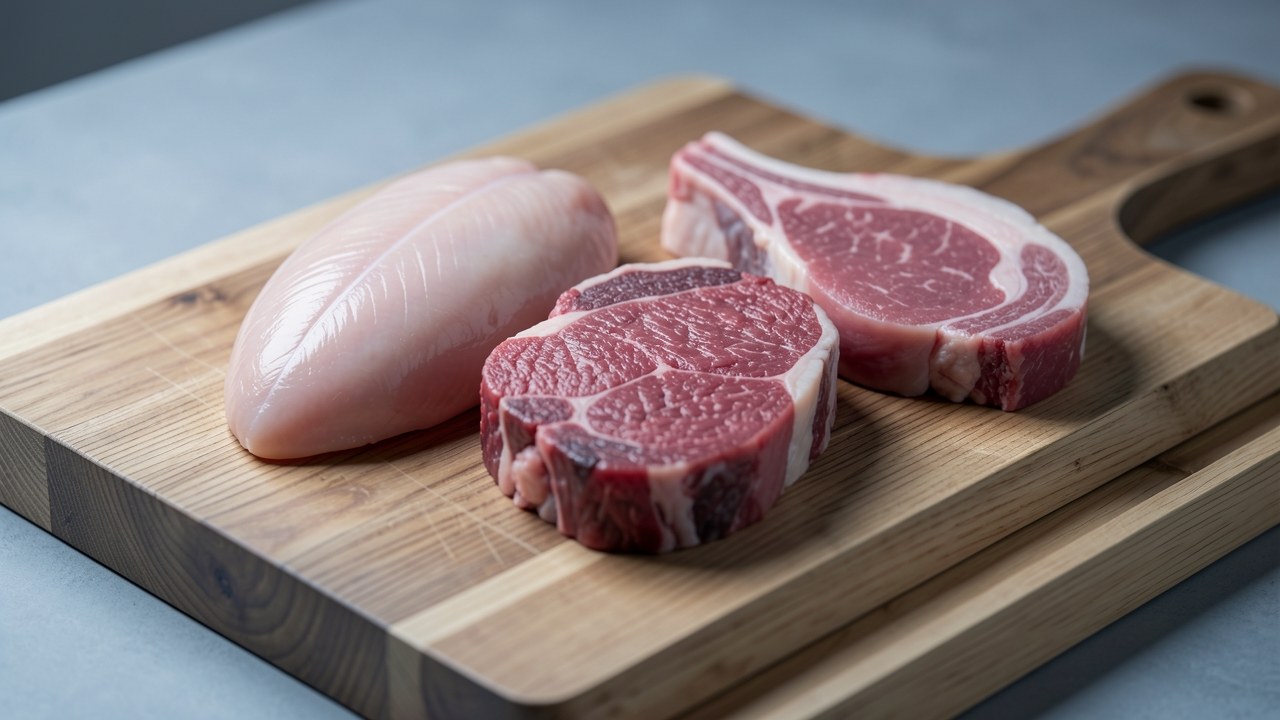
Protein Content by Cut
The protein content of meat and poultry depends on the cut, the animal, and how you prepare it. Raw and cooked weights differ because cooking removes moisture, so protein density per ounce is higher in cooked meat. The table below compares protein values for common cuts.
In general, one ounce of cooked meat, poultry, or fish provides about 7 grams of protein. For example, a 4-ounce raw chicken breast (about 25.4 g protein) shrinks to roughly 3 ounces cooked, delivering about 26 grams of protein, which fits that rule-of-thumb.
| Cut | Protein per 4 oz raw (g) | Protein per 3 oz cooked (g) |
|---|---|---|
| Chicken breast (skinless, boneless) | 25.4 | 26 |
| Pork loin chop | 24.4 | Not stated |
| Top sirloin beef steak | 22.5 | Not stated |
| Ground turkey (93% lean) | 22.3 | Not stated |
| Ground beef (90% lean) | 21.9 | 21 |
Sources: Everyday Health, Allina Health
Chicken and Turkey: Lean Choices
Skinless chicken breast is a standout for protein per calorie and is lower in saturated fat than many red meats. Turkey and chicken are naturally lean, especially when you choose breast meat and remove the skin.
Dark meat chicken is still a good source of protein (a 3-ounce serving of roasted dark meat provides about 24 grams), but it contains more fat and slightly more saturated fat than light meat. Ground turkey (93% lean) provides about 22.3 grams of protein per 4-ounce raw patty, making it a solid ground-meat option.
- Skinless chicken breast: ~25.4 g protein per 4 oz raw (26 g per 3 oz cooked).
- Ground turkey (93% lean): ~22.3 g protein per 4 oz raw.
- Turkey light meat (cooked): ~25 g protein per 3 oz.
Sources: Everyday Health, Allina Health, American Heart Association, Verywell Health
Beef and Pork: Navigating Cuts
Beef and pork can fit into a protein-rich diet, but the amount of saturated fat varies significantly by cut. Lean beef cuts include sirloin, top round, flank steak, and ground beef labeled at least 90% lean. Pork loin chops and tenderloin are leaner choices, while fatty cuts like ribs and regular ground beef contain more saturated fat.
For example, a top sirloin steak provides about 22.5 grams of protein per 4-ounce raw serving, and a pork loin chop offers about 24.4 grams. Choosing these leaner cuts helps you get protein without excess saturated fat.
- Top sirloin steak: ~22.5 g protein per 4 oz raw.
- Pork loin chop: ~24.4 g protein per 4 oz raw.
- Ground beef (90% lean): ~21.9 g protein per 4 oz raw.
Sources: Everyday Health, Rutgers NJAES Cooperative Extension, Verywell Health, Allina Health
Cooking Methods and Protein Content
The way you cook meat and poultry can affect the final protein concentration due to moisture loss, but it does not change the amount of protein in the meat itself. Baking, broiling, or roasting are preferable to grilling or charring at high temperatures, which may produce potentially harmful compounds. These methods also help render fat and reduce calorie density.
Whether you grill or bake, the protein content per 100 grams will appear higher in cooked meat because water evaporates. For example, 4 ounces of raw chicken breast (25.4 g protein) becomes about 3 ounces cooked (26 g protein), so the protein per ounce increases, but the total protein stays nearly the same.
Sources: Everyday Health
Health Considerations: Saturated Fat and Sodium
Diets high in saturated fats raise LDL ('bad') cholesterol levels, increasing the risk of coronary heart disease. Red meats (beef, pork, lamb) generally have more saturated fat than skinless chicken, fish, and plant proteins. Fatty cuts of beef, pork, and lamb, regular (75% to 85% lean) ground beef, regular sausages, hot dogs, and bacon are particularly high in saturated fat. Some poultry, such as duck, is also high in saturated fat.
Sodium is a concern with processed meats like ham, bacon, and sausages. Even lean cuts can become high in sodium when cured or seasoned. Choosing unprocessed meats and controlling added salt supports a heart-healthy diet.
- Choose lean meat and skinless poultry to limit saturated fat.
- Limit processed meats like bacon, hot dogs, and deli ham.
- Cooking at home allows you to control sodium.
Sources: American Heart Association, Rutgers NJAES Cooperative Extension, Everyday Health
How to Choose Healthier Cuts
To make healthier choices, look for cuts labeled 'loin' or 'round,' such as sirloin, top round, and pork loin. For ground meat, choose at least 90% lean. Always remove visible fat and poultry skin before or after cooking.
The American Heart Association defines a healthy portion of cooked meat as 3 ounces, about the size of a deck of cards. Eating a lot of meat is not a healthy way to lose weight, especially for people with or at risk for heart disease.
- Opt for lean beef cuts: sirloin, top round, flank steak, ground beef 90% lean or higher.
- Select poultry without skin and choose breast meat when possible.
- Limit portions to about 3 ounces of cooked meat per serving.
Sources: American Heart Association, Rutgers NJAES Cooperative Extension, Verywell Health
Side-by-Side Category Comparison
When choosing between meat and poultry, consider both protein content and the amount of saturated fat. The table below compares typical options based on data from the sources.
Use these criteria: higher protein per serving and lower saturated fat generally indicate a healthier choice.
| Category | Typical protein (per 3 oz cooked) | Saturated fat profile | Example lean choices |
|---|---|---|---|
| Chicken breast | 26 g | Low (without skin) | Skinless breast |
| Turkey (light meat) | 25 g | Low | Ground turkey 93% lean |
| Beef (lean cuts) | 21–22 g | Moderate to low (depending on cut) | Sirloin, top round, 90% lean ground beef |
| Pork (loin cuts) | 22–24 g | Moderate to low (depending on cut) | Loin chop, tenderloin |
| Processed meats (ham, bacon) | 15–19 g (per 4 oz raw) | High (usually), also high sodium | None (limit intake) |
Sources: Everyday Health, Allina Health, American Heart Association
Frequently asked questions
Which meat has the highest protein per serving?
Among common meats, chicken breast provides one of the highest protein amounts per serving: about 25.4 grams per 4-ounce raw (or 26 grams per 3-ounce cooked). Pork loin chops and top sirloin steak are close, with 24.4 and 22.5 grams per 4-ounce raw, respectively.
Sources: Everyday Health, Allina HealthIs dark meat chicken high in protein?
Yes, dark meat chicken is a good protein source, though it contains slightly less protein per ounce than white meat and has more fat. A 3-ounce serving of cooked dark meat provides roughly 24 grams of protein, making it still a nutritious option. Removing the skin reduces saturated fat.
Sources: Everyday Health, Allina Health, American Heart AssociationHow does grass-fed beef compare to conventional?
The research sources provided do not compare grass-fed and conventional beef directly. However, both can be lean if you choose lean cuts. The key is to select cuts like sirloin or top round and limit portions to about 3 ounces cooked.
Sources: Rutgers NJAES Cooperative Extension, Verywell HealthWhat is the healthiest way to cook meat?
According to the sources, baking, broiling, or roasting are preferable to grilling or charring at high temperatures, which may produce potentially harmful compounds. These methods also help render off fat. The actual protein content remains similar regardless of cooking method, but these techniques help avoid added fats and harmful byproducts.
Sources: Everyday HealthIs processed meat still a good protein source?
Processed meats like ham and bacon provide protein—for example, sliced ham has about 18.6 grams per 4-ounce serving and bacon about 15.4 grams per 4-ounce raw. However, they are often high in saturated fat and sodium. An observational study in older women linked higher processed red meat intake to a higher risk of dementia-related death, but that study does not prove cause and effect. The American Heart Association recommends choosing unprocessed, lean meats to limit saturated fat and sodium.
Sources: Everyday Health, American Heart AssociationSources
- We Ranked Meats by Protein Content — Find Out Which Meats Have the Most — Everyday Health
- Picking Healthy Proteins — American Heart Association
- Protein in meat, poultry and fish — Allina Health
- FS1055: Smart Food Choices: Eat Lean Protein (Rutgers NJAES) — Rutgers NJAES Cooperative Extension
- 10 Highest Sources of Protein — Verywell Health
- Older women who ate more plant protein had lower risk of premature, dementia-related death — American Heart Association