Protein Needs for Vegetarians
Protein is a key nutrient for building and repairing tissues, making enzymes, and supporting many bodily functions. Whether you follow a lacto-ovo vegetarian pattern (including eggs and dairy) or a stricter plant-based plan, meeting your daily protein needs is very achievable.
A common worry is that vegetarian diets might not provide enough protein, but well-planned vegetarian and vegan diets can provide all necessary nutrients, including protein. Most active adults need around 0.8 grams of protein per kilogram of body weight, but needs vary based on activity level, age, and health status. No matter your target, you can reach it by including a variety of plant protein sources throughout the day.
Instead of counting grams at every meal, focus on building your plate with legumes, soy foods, nuts, seeds, and whole grains. These foods naturally fit into breakfast, lunch, dinner, and snacks — making it simpler to hit your daily protein target without overthinking.
Sources: Healthline, Regency Healthcare, Texas Real Food
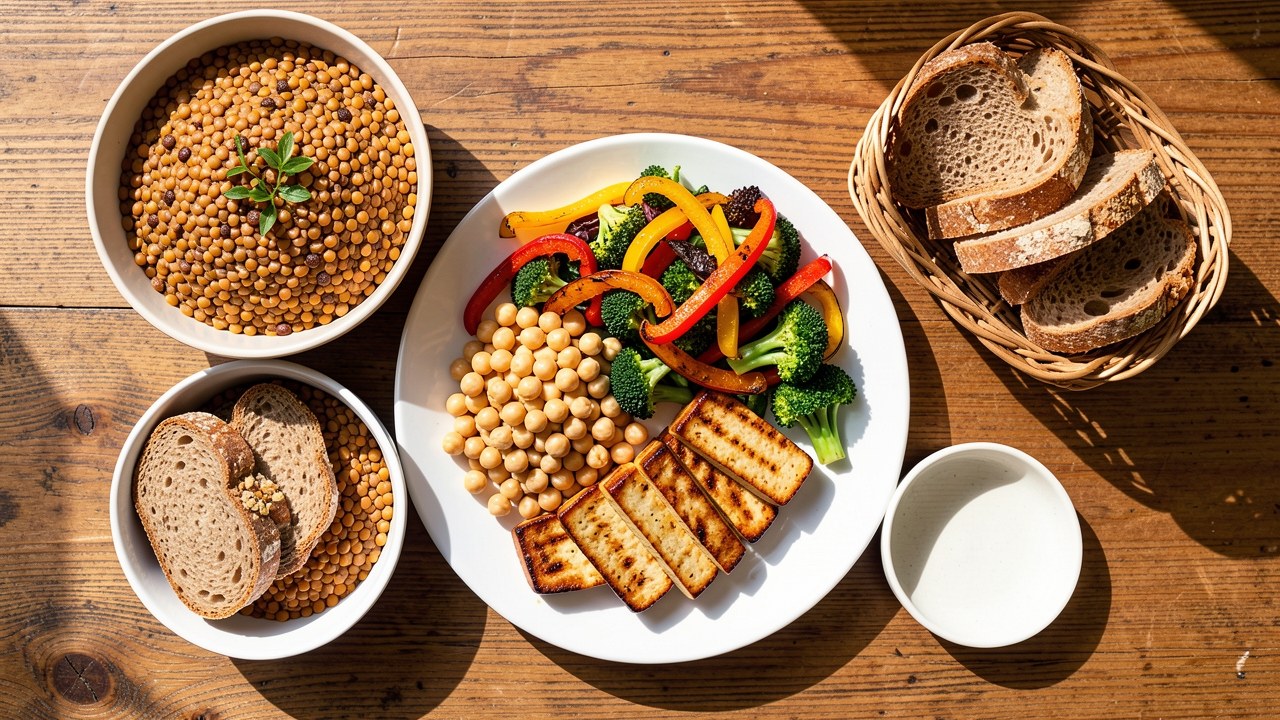
Top Vegetarian Protein Sources and Their Protein Content
Perhaps the biggest question for new vegetarians is: “What should I eat to get enough protein?” The good news is that many plant-based foods are naturally rich in protein. The table below highlights some of the most protein-dense options, with approximate amounts per serving.
| Food | Serving | Protein (grams) |
|---|---|---|
| Seitan | 3.5 oz (100 g) | 25 |
| Tempeh | 3.5 oz (100 g) | 19 |
| Lentils (cooked) | 1 cup | 18 |
| Tofu | 3.5 oz (100 g) | 17 |
| Edamame (cooked) | 1 cup | 17 |
| Chickpeas (cooked) | 1 cup | 15 |
| Quinoa (cooked) | 1 cup | 8 |
| Green peas (cooked) | 1 cup | 8 |
| Spinach (cooked) | 1 cup | 5 |
Sources: Healthline
Building a Balanced Vegetarian Plate
The term “complete protein” refers to a food that contains all nine essential amino acids in sufficient amounts. Most animal foods are complete, but many plant foods are not. However, you don’t need to worry about combining specific foods at every meal. Eating a variety of plant proteins over the course of a day supplies all the essential amino acids your body needs.
A simple way to build a balanced vegetarian plate is to think in quarters. Fill half your plate with non-starchy vegetables, a quarter with whole grains (like brown rice, quinoa, or whole-wheat pasta), and a quarter with a protein-rich food such as beans, lentils, tofu, or tempeh. Add a sprinkle of nuts or seeds for extra protein and healthy fats.
If you include dairy and eggs, they can easily add high-quality protein to meals. For example, a spinach and feta omelet for breakfast or Greek yogurt with nuts for a snack can boost your daily intake without much effort.
Sources: Healthline, Texas Real Food
Understanding Complementary Proteins
The idea of complementary proteins involves pairing two incomplete plant proteins so that their amino acid profiles together become complete. Traditionally, people talked about combining beans and rice or peanut butter with whole-grain bread. While that approach works, modern nutritional science shows that as long as you eat a varied diet throughout the day, your body can pool amino acids from different foods.
For example, beans and rice are a classic pairing. Beans are low in methionine but rich in lysine, while rice is low in lysine but provides methionine. Together, they provide a complete protein. But you don’t have to eat them in the same meal. Having beans at lunch and rice at dinner still helps you meet your amino acid needs for the day.
A few plant foods are themselves complete proteins, including soy products (tofu, tempeh, edamame), quinoa, amaranth, hemp seeds, and spirulina. Including these in your routine can make it easier to cover your amino acid bases.
For vegetarians who consume eggs and dairy, these foods are also complete proteins. A piece of cheese or a hard-boiled egg can complement a plant-based meal.
In practice, the simplest advice is to eat a wide range of plant foods — legumes, grains, nuts, seeds, and vegetables — and let your body do the rest.
Sources: Fit Life Regime, Texas Real Food
Overcoming Common Protein Concerns
New vegetarians often worry about whether they can get enough protein without meat. The evidence is reassuring: most vegetarians and vegans easily meet their protein needs through whole foods alone. Only those with higher requirements, such as endurance athletes or people building muscle, might consider supplements to help hit a higher target.
You may have heard that soy is problematic, but research does not support that for most people. Soy foods like tofu, tempeh, and edamame are complete proteins and can be safely included as part of a vegetarian diet. If you have a thyroid condition or other health concern, talk to your healthcare provider about soy intake.
Another common concern is that a vegetarian diet might be low in iron, zinc, or vitamin B12. While it's true that plant-based iron is less easily absorbed, you can enhance absorption by pairing iron-rich foods like lentils and spinach with vitamin C sources such as citrus fruits or bell peppers. Vitamin B12 is only found naturally in animal products, so if you avoid all animal foods, consider a B12 supplement or fortified foods. Again, a well-planned diet can prevent most nutrient shortfalls.
Sources: Healthline, Fit Life Regime, Texas Real Food
Sample One-Day Vegetarian Meal Plan
Here’s a sample day that shows how easy it can be to incorporate protein-rich foods into meals. This is not a rigid prescription, but a starting point for your own menu.
Breakfast: Greek yogurt (if you eat dairy) with berries and a sprinkle of hemp seeds, or a smoothie made with pea protein, spinach, and banana.
Lunch: Lentil soup with a side of quinoa salad and roasted vegetables.
Snack: Apple slices with peanut butter or a handful of almonds.
Dinner: Tofu and vegetable stir-fry with brown rice, seasoned with ginger and garlic.
This flexible pattern provides protein from dairy (if chosen), legumes, whole grains, nuts, and soy. Adjust portions to suit your appetite and activity level.
Sources: Healthline, Fit Life Regime
Tips for Vegetarian Athletes
Athletes have higher protein needs than sedentary individuals, but vegetarian athletes can meet them through careful planning. Focus on eating protein at every meal and snack, and choose protein-dense foods like tofu, tempeh, lentils, and Greek yogurt (if allowed).
After a workout, aim to consume a meal or snack within a couple of hours. A balanced option could be a tempeh and vegetable wrap, a lentil and rice bowl, or a protein shake made with soy or pea protein. Including protein after exercise helps with muscle repair and recovery.
If you struggle to eat enough protein from whole foods alone, you might consider a protein powder. Options for vegetarians include soy, pea, rice, and hemp protein, or blends like rice and pea. Some are complete on their own, while others can be combined to provide all essential amino acids. Protein powders are supplements — not replacements — and most vegetarians don’t need them, but they can be a convenient way to boost intake.
Sources: Healthline, Fit Life Regime
Frequently asked questions
Can vegetarians get enough protein without supplements?
Yes. Most vegetarians can meet their protein needs through a variety of whole foods such as legumes, tofu, tempeh, nuts, seeds, and whole grains. Well-planned vegetarian and vegan diets can supply all necessary nutrients, including protein.
Sources: Healthline, Regency HealthcareWhat are the best sources of protein for vegetarians?
Some of the highest protein whole-food options include seitan, tofu, tempeh, edamame, lentils, and beans. Other valuable sources include quinoa, hemp seeds, nutritional yeast, and green peas. If you eat dairy and eggs, they are also excellent sources of protein.
Sources: HealthlineIs soy safe for everyone?
Soy foods like tofu, tempeh, and edamame are complete proteins and are safe for most people. There is no strong evidence that moderate soy intake is harmful for the general population. If you have a specific health condition (such as thyroid issues), it’s wise to talk to your doctor about your soy consumption.
Sources: Fit Life RegimeWhat should a vegetarian eat after a workout?
A post-workout meal or snack should include protein to support muscle repair. Good options include a tempeh and vegetable wrap, a lentil and rice bowl, Greek yogurt with fruit (if you eat dairy), or a smoothie with soy or pea protein powder. Pairing protein with carbohydrates, like fruit or whole grains, can also help replenish energy stores.
Sources: Healthline, Fit Life RegimeSources
- The 18 Best Protein Sources for Vegans and Vegetarians — Healthline
- High-Protein Vegetarian & Vegan Foods: Calculator and List — Fit Life Regime
- High-Protein Vegan Foods & Vegetarian Protein Sources — Regency Healthcare
- Power Up with the Best Foods for a High-Protein Vegetarian Diet — Texas Real Food